
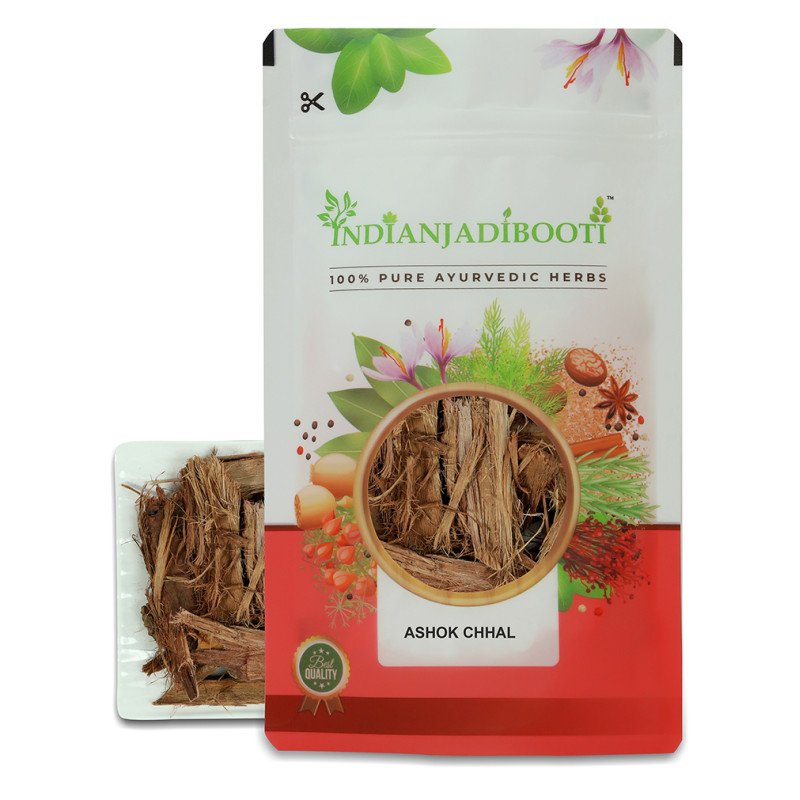
What is Ashoka Chhal?
Ashoka, known as the Ashoka briksh is one of the most ancient and sacred trees found all over India. Ashoka has various medicinal properties, especially its bark and leaves.
what are the uses of Ashoka Bark?
Bark from the Ashoka tree has been used for centuries in traditional Chinese medicine to treat infections such as boils, abscesses and toothaches because it contains tannic acid which kills bacteria on contact, without harming surrounding tissue or causing any pain.
What are the Key Benefits?
The leaves of the Ashoka tree are rich in vitamin A and C and antioxidants which makes them very healthy for you to consume. They are also used in Ayurveda, which is an Indian system of medicine that dates back to 2500 BC. The leaves are used to treat skin problems such as eczema, psoriasis and acne as well as other ailments such as diabetes, high blood pressure and even cancer!
How to use Ashoka Bark?
Ingredients:
- 4 cups of water
- 1 cup of bark from the Ashoka tree
- - A pot or saucepan
- - A strainer/colander
- - A bottle to store your medicine in
Step 1: Boil the bark of Ashoka tree in water until the volume of liquid reduces to one-fourth of its original volume. This should take about 20 minutes. When it's done, strain the liquid into another pot and discard the bark pieces. You now have your Ashoka kwatha! Pour it into a bottle and store it in the fridge until you're ready to use it—it'll keep for about two weeks if you don't use too much at once (otherwise, just add more water).
Step 2: Take 8-10 teaspoons of this Ashoka kwatha with a glass of water twice per day between lunch and dinner for up to 2 weeks.
Other Names: Ashoka, Chaal, Arbre d’Ashoka, Saraka, Anganapriya, Ashokadamara, Asokamara, Kankalimara, Saraca indica Linn, Ashok, Asok, Asoka, Sita Ashok, Hemapushpa, Kankeli, Ashoka , Saraca indica, Ahok, Ashok, Ashok-goch, Ashokam, Ashok tree, Ashopalava, Sita Ashok, Achenge, Mir krem, Hemapushpam, Ashokam, jasundi, Sorrowless Tree, Asogam, Asokamu, Achenge, Asok, Asokam, Hemapushpam, Anagam, Ashogam, Asokamu, Vanjulamu, Ashok, Anganapriya, Apashaka, Ashoka tree, Sita-Ashoka, Anganapriya, Ashopalava, Ashoka, Asupala, Apashaka, Ashoka, Vanjulam , Oshok , Ashoka, Asogam , Asokam, Asokamu , Sokanam , Kenkalimara, Tengalan, Hempushpa, Sorrowless tree, Ashopalava, Achenge, Hemapushpam, Jasundi, Asogam, Asokamu, Ashau. Saraca indica, Shabuqa, Ashoke, Thawgabo, Thawka. Wu you hua, Ashokbaum, Ashopalava, Mayuju, Achenge, Ashoka, Ashokadamara, Osoko, Ashoka, Anganapriya, Apashaka, Ashoka, Gandapushpa, Hemapushpa, Madhupushpa, Pindapushpa, Pindipushpa, Vanjula, Vichitra, Vishoka, Diyeratembela, Diyaratmal, Anagam, Ashogam, Asogu, Sasubam, Asokamu, Vanjulamu
Also Read: BENEFITS OF ASHOKA CHAAL


5 Comment(s)
Ashoka chal kya sugar mein faayeda karta hai kya.
Somehow, missing all of the aquatic-ready features, this watch still hits for me. I look at it and it looks back with a face that oozes confidence. This watch doesn't care that you can't go diving with it. Would you dive with a Patek or an AP? I doubt it. And that's the point.
Omega already hinted on its social media channels that today would be special. And indeed, the attentive Speedmaster enthusiast should immediately recognize the date. October 3rd, 1962, was the day that an Omega watch entered space for the first time <a href="https://afriopp.com/employer/amberh2009/" >link</a> on Wally Schirra's wrist.
A mostly full resin construction, with steel caseback, means the AE-1500 floats on the wrist – my scale measures right around two ounces all together. The practically nonexistent lugs are seamlessly integrated with the resin strap that shoots straight down, ensuring a compact 54.4mm lug-to-lug distance.
This was an enjoyable and insightful post. The content flows smoothly and keeps the reader engaged from start to finish. I regularly explore helpful websites online to learn something new, and this article definitely caught my attention and was worth the read.
Leave a Comment