
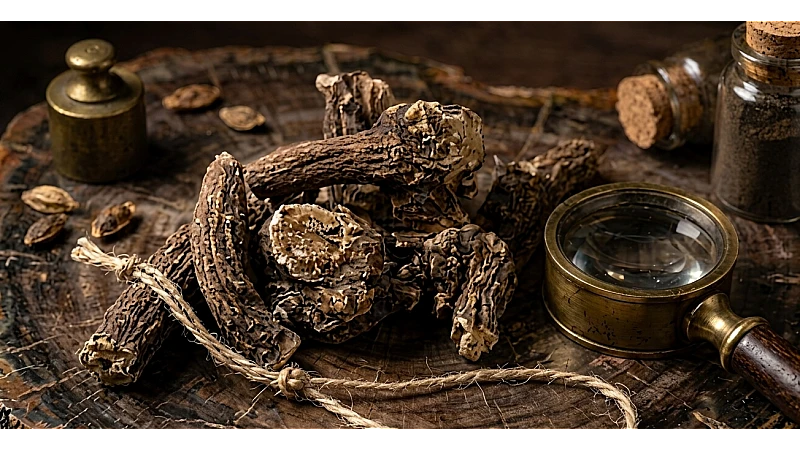
Benefits of Pushkarmool: Pushkar Mool, Orris Root and Its Traditional Ayurvedic Value
Home → Ayurvedic Herb Glossary → Pushkarmool / Pushkar Mool / Orris Root → Benefits of Pushkarmool
Quick Answer: What Are the Benefits of Pushkarmool?
Pushkarmool, also written as Pushkar Mool, Pushkaramool, Pushkarmula and commonly known as Orris Root in trade, is the dried root of Inula racemosa. In traditional Ayurveda, it is valued as a warming, aromatic root used in carefully selected wellness routines and formulations. It is especially known in traditional respiratory wellness, digestive comfort and heart-wellness contexts, but it should not be used as a replacement for medical care or prescribed treatment.
Good-quality Pushkarmool should be clean, dry, properly identified and naturally aromatic. It should not be damp, mouldy, artificially scented or mixed with unknown roots. For regular internal use, dosage and suitability should be discussed with a qualified Ayurvedic practitioner, especially for children, pregnant women, elderly people and those taking medicines.
Table of Contents
- Quick Answer
- Explore the Ayurvedic Herb Glossary
- Explore the Complete Pushkarmool Knowledge Guide
- What is Pushkarmool?
- Pushkarmool Names and Botanical Identity
- Why Pushkarmool is Traditionally Valued in Ayurveda
- Key Traditional Benefits of Pushkarmool
- Pushkarmool for Traditional Respiratory Wellness
- Pushkarmool and Digestive Comfort in Traditional Use
- Pushkarmool and Heart Wellness Context in Ayurveda
- Pushkarmool Root vs Pushkarmool Powder for Benefits
- IndianJadiBooti Customer Observations
- How to Choose Good-Quality Pushkarmool
- How Pushkarmool is Commonly Used
- Safety and Precautions
- Common Mistakes to Avoid
- Related Guides
- Further Reading
- FAQs
- Conclusion
Explore the Ayurvedic Herb Glossary
IndianJadiBooti has created an Ayurvedic Herb Glossary to help readers discover related herbs, roots, powders, seeds, barks, dried botanicals, traditional names, botanical identities, formulations and Ayurvedic ingredients. If you are exploring traditional jadibooti ingredients, the glossary is a helpful starting point for understanding names, plant parts and product forms.
Explore the Complete Pushkarmool Knowledge Guide
Want to learn more about Pushkarmool, Pushkar Mool, Orris Root, Inula racemosa, traditional Ayurvedic use, benefits, root vs powder comparison, dosage guidance, safety precautions, quality checking and product selection?
Read the Complete Pushkarmool Guide
What is Pushkarmool?
Pushkarmool is a traditional Ayurvedic herb obtained from the root of Inula racemosa. In the Indian jadibooti market, it is commonly sold as dried root pieces and sometimes as powder. It is known by several spellings and trade names, including Pushkar Mool, Pushkaramool, Pushkarmula, Pushkar Mula, Orris Root and Indian Orris Root.
The word “mool” means root, so Pushkar Mool refers to the root portion of the plant used in traditional herbal practice. In classical Ayurvedic contexts, Pushkarmool is generally discussed as a warming and aromatic root. Because it is a potent traditional herb, it should be used with care, proper identification and guidance rather than casual overuse.
For buyers, the most important point is correct identity. Pushkarmool should not be confused with Mulethi, Ashwagandha root, Vacha, Sonth or any unknown fragrant root sold under a similar name. Root-based herbs can look similar when dried, so buying from a trusted jadibooti supplier matters.
Pushkarmool Names and Botanical Identity
Pushkarmool has several common names, and this often creates confusion for new buyers. The table below explains the important names and how they should be understood.
| Name | Meaning / Context | Buyer Note |
|---|---|---|
| Pushkarmool | Common Indian jadibooti name | Most commonly used spelling in online searches. |
| Pushkar Mool | Separated spelling of Pushkarmool | Same traditional herb when correctly identified. |
| Pushkaramool / Pushkarmula | Alternative spelling or Sanskrit-style usage | Useful in traditional and Ayurvedic references. |
| Orris Root | Trade/common name used in some markets | Should be checked carefully because “orris” can refer to other aromatic roots in different contexts. |
| Inula racemosa | Botanical identity | Important for correct identification and responsible sourcing. |
Why Pushkarmool is Traditionally Valued in Ayurveda
Pushkarmool is traditionally valued because of its warming, aromatic and sharp nature in Ayurvedic use. It is not a casual kitchen spice like jeera or saunf. It is a stronger traditional root that is usually used in small quantities, formulations or practitioner-guided routines.
In traditional Ayurvedic discussions, Pushkarmool is often associated with the chest region, breathing comfort, kapha-related heaviness, digestive support and certain wellness formulations. However, this does not mean it should be used as a cure for any respiratory, cardiac, digestive or chronic health condition. Responsible herbal use means understanding both traditional value and safety boundaries.
For IndianJadiBooti customers, the most common interest is practical: they want to know what Pushkarmool is, whether it is the same as Orris Root, how it is traditionally used, whether root or powder is better, and how to identify clean material. These are the right questions to ask before buying or using any dried root herb.
Key Traditional Benefits of Pushkarmool
The benefits of Pushkarmool should be understood in the traditional Ayurvedic sense, not as guaranteed medical effects. It is better to say Pushkarmool is “traditionally valued for” certain wellness contexts instead of saying it “treats” or “cures” diseases.
| Benefit Area | Traditional Context | Responsible Explanation | Usage Caution |
|---|---|---|---|
| Respiratory wellness | Traditionally associated with chest and breathing comfort routines | Used in Ayurveda in respiratory wellness contexts, usually under guidance. | Do not use as a substitute for asthma, cough, bronchitis or breathing treatment. |
| Kapha-related heaviness | Warming and aromatic herb traditionally used in kapha-balancing contexts | May be included in traditional routines where warmth and sharpness are desired. | People with heat, acidity or sensitivity should be careful. |
| Digestive comfort | Traditionally used in selected digestive wellness contexts | Its warming nature is traditionally considered useful in some formulations. | May not suit people with acidity, ulcers or gastric irritation. |
| Heart wellness context | Discussed in some Ayurvedic traditions for hridya-related contexts | Should be understood as traditional wellness language, not a heart-disease claim. | People with heart conditions or medicines should consult a doctor/practitioner. |
| Traditional formulations | Used as an ingredient in selected Ayurvedic preparations | Its value depends on correct dose, combination and practitioner knowledge. | Do not mix randomly with other herbs or medicines. |
Pushkarmool for Traditional Respiratory Wellness
One of the most searched topics around Pushkarmool is its traditional connection with respiratory wellness. In Ayurveda, Pushkarmool is often discussed in relation to the chest region and kapha-related respiratory routines. This is why many people search for Pushkarmool for cough, Pushkarmool for breathing comfort or Pushkarmool for respiratory health.
However, it is important to be very clear: Pushkarmool should not be described as a cure or treatment for cough, asthma, bronchitis, breathlessness, chest pain or any respiratory disease. If a person has breathing difficulty, persistent cough, wheezing, chest tightness, fever, blood in sputum or recurring respiratory symptoms, medical evaluation is necessary.
Traditional respiratory wellness use of Pushkarmool should be understood as a practitioner-guided Ayurvedic context. It may be part of traditional formulations or routines, but it should not replace prescribed inhalers, medicines, diagnosis or emergency care.
Responsible Language for Pushkarmool and Respiratory Wellness
| Use This Responsible Language | Avoid This Medical Claim |
|---|---|
| Traditionally valued in respiratory wellness routines | Cures asthma |
| Used in Ayurveda in chest-wellness contexts | Treats bronchitis |
| May be used under practitioner guidance | Gives instant relief from cough |
| Should not replace medical care | Removes all respiratory problems |
Pushkarmool and Digestive Comfort in Traditional Use
Pushkarmool is also traditionally discussed in digestive contexts because of its warming and aromatic character. In Ayurveda, warming herbs are sometimes used in carefully selected routines where heaviness, sluggishness or kapha-type imbalance is considered. But this traditional explanation should not be stretched into a claim that Pushkarmool treats digestive disease.
People with acidity, ulcers, burning sensation, gastric irritation, loose motions, inflammatory digestive conditions or strong sensitivity to heating herbs should be careful. A herb that suits one person may not suit another, especially when it has a warming nature.
Pushkarmool and Heart Wellness Context in Ayurveda
Some traditional Ayurvedic discussions connect Pushkarmool with heart-wellness contexts. This is one reason people search for Pushkarmool benefits for the heart. However, this topic requires extra care because heart symptoms can be serious and should never be handled through self-medication.
Pushkarmool should not be presented as a treatment for chest pain, heart disease, blood pressure, cholesterol, palpitations or blocked arteries. Anyone with chest pain, breathlessness, radiating pain, dizziness, sweating, fainting or known heart disease should seek medical care immediately.
Pushkarmool Root vs Pushkarmool Powder for Benefits
Pushkarmool is commonly available as whole dried root and as powder. Both forms come from the same root when correctly sourced, but they are not identical in quality checking, aroma retention, storage and convenience.
| Factor | Pushkarmool Root | Pushkarmool Powder | Better Choice |
|---|---|---|---|
| Visual quality checking | Easier to inspect for dryness, colour and cleanliness | Harder to identify once powdered | Root |
| Convenience | Needs preparation or grinding depending on use | Ready to measure and use | Powder |
| Aroma retention | Usually retains character better when stored properly | Can lose freshness faster after opening | Root |
| Storage sensitivity | Needs dry storage | More sensitive to moisture and clumping | Root for longer storage |
IndianJadiBooti Customer Observations
- Many customers ask whether Pushkarmool and Pushkar Mool are the same. We explain that they are commonly used spellings for the same traditional root when correctly identified.
- Some customers ask whether Orris Root and Pushkarmool are exactly the same. We clarify that Orris Root can be a trade name, but correct botanical identity matters because common names may vary.
- Customers often ask whether Pushkarmool root or powder is better. We usually explain that root is easier to visually check, while powder is more convenient but needs careful storage.
- Many customers ask whether Pushkarmool can be taken daily. We always recommend moderation and practitioner guidance, especially for regular internal use.
- Customers looking for traditional respiratory wellness support often ask if Pushkarmool can cure cough or asthma. We avoid such claims and explain that it should not replace medical care.
How to Choose Good-Quality Pushkarmool for Traditional Use
The benefits of any jadibooti depend strongly on quality. Even the right herb may not be useful if it is old, damp, mixed, poorly stored or incorrectly identified. With roots like Pushkarmool, visual checking and aroma checking are especially important.
You can buy clean and properly packed Pushkarmool root from IndianJadiBooti here: Buy Pushkarmool Root Online.
| Good Quality Sign | What to Check | What to Avoid |
|---|---|---|
| Dry texture | Root pieces should feel dry and stable. | Avoid wet, sticky or unusually soft pieces. |
| Clean appearance | Material should be reasonably clean and sorted. | Avoid excessive dust, unknown pieces or visible contamination. |
| Natural aroma | The smell should be characteristic and natural. | Avoid chemical, perfumed, rotten or damp smell. |
| No mould | Check for fungus, dampness and black spots. | Do not use mouldy or insect-affected material. |
How Pushkarmool is Commonly Used
Pushkarmool is used in different ways depending on tradition, practitioner advice and product form. It may be used as whole root pieces, coarse material, powder or as part of Ayurvedic formulations. The exact method and quantity should not be guessed, especially for regular internal use.
| Form | Traditional Use Context | Suitability | Caution |
|---|---|---|---|
| Whole root | Used where root pieces are preferred for preparation or quality checking. | Good for buyers who want to inspect the herb visually. | Needs correct preparation and guidance. |
| Powder | Used for convenience and easier measuring. | Suitable when sourced from a trusted supplier. | Store away from moisture and avoid overuse. |
| Formulation ingredient | Used in selected Ayurvedic formulations. | Best under qualified Ayurvedic guidance. | Avoid self-mixing with medicines or strong herbs. |
Safety and Precautions
Pushkarmool is a traditional Ayurvedic root, but traditional does not automatically mean suitable for everyone. The right use depends on age, constitution, health condition, medicines, diet, season and the purpose of use.
| Who Should Be Careful? | Why Caution is Needed | Better Approach |
|---|---|---|
| Pregnant women | Strong herbs should not be self-used during pregnancy. | Consult a qualified practitioner before use. |
| Breastfeeding mothers | Safety and suitability may vary. | Use only with professional advice. |
| Children | Children need age-appropriate guidance. | Do not give without practitioner advice. |
| Elderly people | May have medicines, sensitivity or chronic conditions. | Start only after professional guidance. |
| People with acidity or ulcers | Warming herbs may irritate sensitive digestion. | Avoid self-use and consult first. |
| People taking medicines | Herb-medicine interactions are possible. | Ask your doctor or practitioner. |
Common Mistakes to Avoid
| Mistake | Why It Matters | Better Approach |
|---|---|---|
| Assuming Pushkarmool cures disease | This creates unsafe expectations and may delay medical care. | Use traditional wellness language and seek medical advice when needed. |
| Using too much powder | Powder is easy to overuse because it is convenient. | Use only practitioner-guided quantities. |
| Buying damp or mouldy root | Poor-quality herbs may be unsafe and ineffective. | Choose clean, dry, properly packed root. |
| Confusing Pushkarmool with other roots | Wrong identity changes the product completely. | Buy from trusted jadibooti suppliers. |
Related Guides
- Pushkarmool Root – Benefits, Uses, Dosage & Complete Guide
- Benefits of Pushkarmool Powder - Pushkar Mool - Orris Root
- Pushkarmool Dosage: How to Use Root & Powder Safely
- Pushkarmool Powder vs Root – Which is Better?
- Pushkarmool Root for Respiratory Health – Benefits & Uses
- Buy Pushkarmool Root Online – Premium Quality Ayurvedic Herb
Further Reading
- Plants of the World Online / Kew botanical references for plant identity and accepted plant names.
- World Flora Online for plant taxonomy and botanical naming context.
- PubMed and PMC research articles discussing Inula racemosa, traditional use, phytochemistry and pharmacognosy.
- Ayurvedic materia medica and pharmacognosy references that discuss Pushkarmool in traditional formulations and classical contexts.
FAQs About Pushkarmool Benefits
1. What is Pushkarmool?
Pushkarmool is the dried root of Inula racemosa, a traditional Ayurvedic herb also known as Pushkar Mool, Pushkaramool, Pushkarmula and Orris Root in some trade contexts.
2. What are the main benefits of Pushkarmool?
Pushkarmool is traditionally valued in Ayurveda for respiratory wellness contexts, warming herbal routines, selected digestive support contexts and traditional formulations. These are traditional uses, not guaranteed medical benefits.
3. Is Pushkarmool the same as Orris Root?
In Indian jadibooti trade, Pushkarmool is sometimes referred to as Orris Root. However, common names can vary, so botanical identity and trusted sourcing are important.
4. Is Pushkarmool root better than Pushkarmool powder?
Whole root is better for visual quality checking and may retain aroma longer when stored properly. Powder is more convenient but can lose freshness faster and needs careful storage.
5. Can Pushkarmool cure cough or asthma?
No. Pushkarmool should not be claimed to cure cough, asthma, bronchitis or any respiratory disease. It is traditionally valued in respiratory wellness contexts, but it should not replace medical care.
6. Can Pushkarmool be used daily?
Daily use should not be started casually. Pushkarmool is a potent traditional herb, and regular internal use should be guided by a qualified Ayurvedic practitioner.
7. Who should avoid self-use of Pushkarmool?
Pregnant women, breastfeeding mothers, children, elderly people, people with acidity or ulcers, heart patients, people on regular medicines and those scheduled for surgery should avoid self-use and consult a professional.
8. How do I identify good-quality Pushkarmool root?
Good-quality Pushkarmool root should be clean, dry, naturally aromatic and free from mould, insects, dampness, chemical smell and unknown mixed pieces.
9. Can Pushkarmool powder be mixed with other herbs?
It should not be mixed randomly with other herbs or medicines. Herbal combinations should be selected by a qualified practitioner based on the person’s condition and suitability.
10. Is Pushkarmool safe for children?
Pushkarmool should not be given to children without qualified guidance. Children require age-appropriate dosage and careful safety assessment.
11. Does Pushkarmool have side effects?
Like many herbs, Pushkarmool may not suit everyone. Some people may experience digestive discomfort, heat, irritation or sensitivity. Stop use and seek advice if discomfort occurs.
12. How should Pushkarmool root be stored?
Store Pushkarmool root in a cool, dry place away from moisture, direct sunlight and strong odours. Do not use it if it becomes damp, mouldy or insect-affected.
13. How should Pushkarmool powder be stored?
Pushkarmool powder should be kept in an airtight container after opening. Keep it away from moisture, heat and sunlight. Avoid using powder that is clumpy, damp or foul-smelling.
14. Where can I buy Pushkarmool root online?
You can buy Pushkarmool root from IndianJadiBooti here: https://indianjadibooti.com/Jadistore/pushkarmool.
15. What is the best way to use Pushkarmool?
The best way depends on the form, purpose, age, tolerance and practitioner advice. Do not guess dosage or use it as a replacement for medical treatment.
Conclusion
Pushkarmool, also known as Pushkar Mool, Orris Root and Inula racemosa, is a respected traditional Ayurvedic root with a long-standing place in herbal wellness contexts. It is especially known for its warming, aromatic nature and its traditional association with respiratory wellness, digestive comfort and selected Ayurvedic formulations.
At the same time, Pushkarmool should be used responsibly. It is not a miracle herb, not a disease cure and not a replacement for medical care. Its value depends on correct identification, clean quality, suitable form, proper storage, careful dosage and qualified guidance.
For buyers, whole Pushkarmool root is a good choice when visual quality checking and traditional preparation matter. Pushkarmool powder may be convenient, but it requires trusted sourcing and moisture-safe storage. Always choose clean, dry, properly packed material from a reliable jadibooti supplier.
To buy good-quality Pushkarmool root, visit: https://indianjadibooti.com/Jadistore/pushkarmool