- Stock: In Stock
- SKU: HERB000454
- Shipping: Free within India upto 10KG
- Quality: Premium Herbs with No Adulteration
- Delivery: Within 3 to 7 Working Days in India
- Shipping: From Delhi based Facility
- Transport Charges for 25KG and above: Extra on To Pay
- COD Available: Max Limit: 2 Kg and Rs 3500 per order
- Discount on Prepaid Orders: Rs 50/- off. Auto Apply on Checkout.
Available Options
Quality
Cleaned, sorted, and packed with care for everyday traditional use.
Usage Guidance
Refer to the full product description below, or use as advised by a qualified practitioner.
Storage
Keep sealed in a cool, dry place away from moisture and direct sunlight.
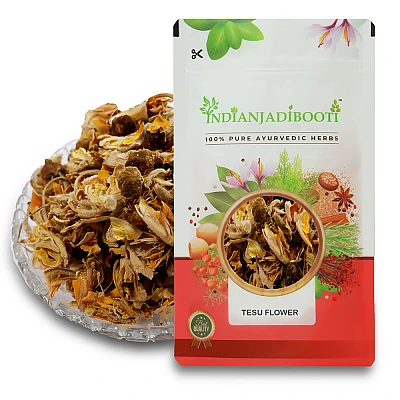
Dried Tesu Flower, also known as Palash Phool, Dhak Flower and Kesuda Flower, is the dried flower of Butea monosperma. It is best known for preparing a traditional orange-yellow water colour for Holi and for cultural, decorative, craft and botanical applications.
Tesu Flower in English: Flame of the Forest Flower
Tesu flower in English is commonly called Flame of the Forest flower. The same flower is known as Palash, Dhak, Kesuda, Kesudo, Kesu and Polash in different regions of India.
| Name | Meaning |
|---|---|
| Tesu / Palash / Dhak | Common Hindi names for the tree and flower |
| Kesuda / Kesudo | Regional names widely used in Gujarat and western India |
| Flame of the Forest | Common English name inspired by the bright orange flowering canopy |
| Butea monosperma | Accepted botanical name |
| Butea frondosa | Older botanical synonym found in books and trade descriptions |
What You Receive
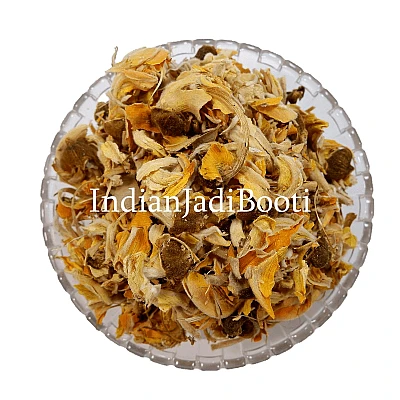
- Product: Dried whole Tesu flowers
- Botanical name: Butea monosperma
- Plant family: Fabaceae
- Other names: Palash Phool, Dhak Flower, Kesuda Flower, Kesu Flower and Flame of the Forest
- Form: Naturally dried flower material
- Main applications: Natural colour extraction, Holi water colour, cultural and ritual use, craft, decoration and botanical study
Dried Tesu Flower Is a Specific Plant Part
This listing is for the flower of the Palash tree. It is not Palash seed, Palash gum or Kamarkas, bark, root or leaf. These materials are sold and used separately and should not be treated as substitutes for one another.
| Material | How it differs |
|---|---|
| Tesu flower | Orange flower used for natural colour and cultural applications |
| Palash seed | A separate seed material with different traditional uses and safety considerations |
| Palash gum / Kamarkas | A gum or exudate collected from the tree |
| Palash leaf or bark | Different tree parts used in separate traditional and practical contexts |
Traditional Holi Colour from Tesu Flowers
Dried Tesu flowers release a yellow-orange colour into water. The shade varies with the flower batch, age, drying method, water temperature and extraction time. Natural colour is usually softer and less fluorescent than commercial synthetic colour.
Simple Water-Colour Method
- Check the flowers and remove visible dust or foreign material.
- Rinse briefly with clean water.
- Cover the flowers with water in a clean container.
- Soak for several hours or overnight. For a deeper shade, warm gently and allow the mixture to cool fully.
- Strain through a fine cloth or strainer before use.
- Patch-test on a small area of skin and keep away from the eyes and mouth.
Prepare water-based colour close to the time of use. Discard it if it develops an unpleasant smell, foam, sliminess or visible growth.
What Research Says About Palash Flower Colour
Researchers have studied Butea monosperma petals as a natural source of orange colour. A 2023 study used hot-water extraction and identified pigment-related marker compounds including iso-coreopsin, butrin and iso-butrin. Other research has identified compounds such as butein and sulfuretin in the flowers.
These studies support the flower’s value as a natural colour source. They do not mean that every dried flower batch has identical composition, or that raw flowers are automatically approved for food, cosmetic or medical use.
Common Uses
- Holi water colour: soaked or gently heated to release orange-yellow pigment
- Festival and seasonal decoration: used in traditional displays and craft work
- Ritual use: used according to regional and family customs
- Natural-dye experiments: suitable for small-scale educational, craft and research work
- Botanical study: used for plant-part identification and reference collections
- Bulk use: available in larger packs for colour makers, institutions, resellers and other suitable applications
Food and Internal-Use Guidance
Traditional food or beverage uses are reported in some communities, and controlled research has investigated a food-grade dye extracted from Palash petals. However, that does not establish that every raw dried flower pack is suitable for eating.
Use internally only when the actual batch is expressly supplied for food use and when the preparation is appropriate for the user. Do not use general online recipes to treat diabetes, liver disease, infections, joint pain, menstrual symptoms or any other medical condition.
How to Check Quality
- The material should consist mainly of recognizable dried flower pieces.
- Natural shades can range from muted yellow-orange to reddish orange.
- Flowers should be dry rather than damp, sticky or slimy.
- A mild plant-like or earthy smell is normal; musty or chemical odours are not.
- Avoid material with visible mould, webbing, insects or damp clumps.
- Small natural stems may occur, but excessive dust and unrelated plant matter should not.
- Very bright fluorescent colour may indicate added dye and deserves closer inspection.
Storage
Store dried Tesu flowers in an airtight container in a cool, dry and dark place. Protect them from direct sunlight, moisture, insects and strong odours. Always use clean, dry hands or a dry scoop.
Natural pigments fade gradually with light, air and age. Proper storage helps preserve colour strength and reduces the risk of spoilage.
Safety Information
- Natural flower colour is not guaranteed allergy-free. Patch-test before broader skin use.
- Avoid the eyes, mouth, broken skin and irritated areas.
- Stop use if redness, itching, swelling or burning occurs.
- Supervise children and prevent swallowing of flowers or concentrated colour water.
- Do not use mouldy, contaminated or chemically smelling flowers.
- Reliable human evidence for medicinal dosing is limited.
- Pregnant or breastfeeding individuals, children, people taking medicines and those managing health conditions should obtain qualified advice before internal use.
Frequently Asked Questions
What is Tesu flower called in English?
It is commonly called Flame of the Forest flower. The botanical name is Butea monosperma.
Are Tesu, Palash, Dhak and Kesuda the same flower?
These are widely used regional names for the flower of the same botanical species, although spelling and pronunciation differ.
Can dried Tesu flower be used for Holi colour?
Yes. The flowers can be soaked or gently warmed in water and strained to make a traditional yellow-orange water colour.
Why does the colour vary between batches?
Flower maturity, drying, storage, age, water temperature and extraction time all influence the final shade and strength.
Is Tesu flower the same as Kamarkas?
No. Tesu flower is the flower, while Kamarkas generally refers to the gum or exudate of the Palash tree.
Can Tesu flower be consumed?
Use it internally only when the actual product is clearly supplied for food use and the source and preparation guidance are reliable.
Learn More About Tesu Flower
Read the detailed guide to Palash flower identity, natural Holi colour, modern research, traditional context and safety.
Read the Tesu Flower GuideChoose the Pack Size You Need
Select an available retail, wholesale or sample pack above to view the current price and place your order.
100% Customers recommend this product
-
5 Awesome100%
-
4 Great0%
-
3 Average0%
-
2 Bad0%
-
1 Poor0%
Reviews Over Tesu (Flower) Dried - Kesuda - Palash (Phool) - Phool Tesu - Dhak Fool - Butea Monosperma by IndianJadiBooti
- (5)
Total Reviews (22)
click here write review to add review for this product.
-
(0)
-
(0)
-
(0)
-
(0)
-
(0)
Report this review.
What are the traditional benefits of Tesu Phool (Palash Flowers)?
Tesu Phool, or Butea Monosperma, is traditionally revered in Ayurveda for its potent cooling properties. It is widely used to balance Pitta dosha, manage body heat, and promote a healthy, clear complexion.
Based on IndianJadiBooti.com catalogue and qualifying website order records. Website-order figures exclude Amazon and other marketplace channels.
3–7 Business Days
Orders up 2 KG or ₹3500
25kg+ shipped via transport
Custom duties may apply
Custom Clearance is Customer's Responsibility